

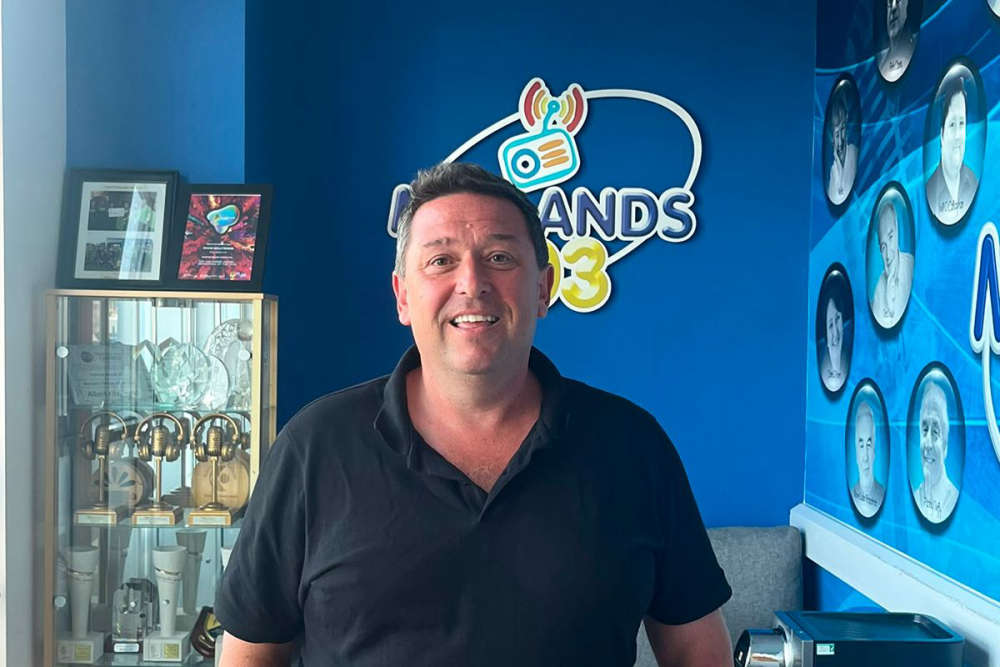
Retired Sgt. Graham Kavanagh says remembrance without learning is not prevention.
A man's reflection-as a son, husband, father and friend. Ireland has developed a familiar ritual when a woman is killed.
There is shock. There are flowers, candles and photographs. There are expressions of sympathy and declarations that something must change. Then, gradually, the public attention moves elsewhere-until another woman dies and we repeat the same words.
But remembrance without learning is not prevention.
On 7th of July 2026, Women's Aid reported that eight women had already died in violent circumstances in the Republic of Ireland during the year-more than the seven recorded during the whole of 2025. Its Femicide Watch had recorded 286 violent deaths of women since 1996. Of the resolved cases, almost nine in ten women knew the man who killed them, 55% were killed by a current or former intimate partner, and 63% were killed in their own homes. In 23 of the 24 recorded murder-suicides, the killer was the woman's current or former partner.
Those figures should stop us in our tracks.
Men are also murdered-but the pattern is different
Honesty requires us to acknowledge that men constitute the majority of homicide victims. In 2025, the CSO recorded 40 victims of murder, manslaughter or infanticide: 30 were male and ten were female. Violence against men matters, and male victims should never be treated as statistically or morally unimportant.
But counting victims alone does not explain offending.
A Garda analysis of murders, manslaughters and infanticides between 2013 and 2021 found that 84% of female victims knew the offender. In 55% of cases, the offender was a current or former intimate partner, while a further 20% involved another family relationship. For male victims, only 4% involved a current or former partner.
The same Garda analysis found that a suspected male offender was identified in 89% of murders involving a female victim. It also found that, between 2019 and 2021, 90% of female victims of murder, manslaughter or infanticide were recorded as victims in domestic-abuse-related incidents. The underlying annual numbers are small and percentages can therefore fluctuate, but the recurring pattern across the datasets is unmistakable.
The issue is not simply that women are being killed.
It is how they are being killed, where they are being killed and by whom.
For many male homicide victims, the violence occurs within criminal activity, public disorder, disputes, acquaintanceships or encounters with strangers. For many female victims, the danger is much closer: a husband, boyfriend, former partner, son or other family member.
The place that should offer the greatest security-the home-can become the most dangerous place of all.
The murder is often the end of the story, not its beginning
We sometimes describe the killing of a woman as though an ordinary relationship suddenly and inexplicably "turned tragic".
There may be references to a breakup, marital difficulties, jealousy, alcohol, depression, financial problems or an argument. The language can unintentionally transform an offender's choices into some uncontrollable force of nature.
But intimate-partner homicide is frequently preceded by a pattern of behaviour: isolation, humiliation, surveillance, possessiveness, financial control, threats, stalking, sexual violence and coercive control.
International research identifies previous violence, coercive control, stalking, non-fatal strangulation, threats, relationship separation and access to weapons as significant warning factors. Recent British domestic homicide reviews found coercive control particularly prevalent in intimate-partner cases, while many perpetrators had previously abused another partner or family member. These findings cannot simply be imported into every Irish case, but they provide important evidence about the behaviours that should trigger urgent risk management.
What may look from outside like a man "losing control" may, in reality, be the final expression of his determination to retain control.
That distinction matters.
A man who believes that a woman belongs to him may experience her independence, refusal or departure not as the legitimate decision of another human being, but as an intolerable challenge to his authority. The violence is then presented as jealousy, passion or emotional collapse when its foundation may be entitlement.
A woman is not murdered because she ended a relationship. She is murdered because a man decided that her decision could not be permitted.
"Why didn't she leave?" is the wrong question
One of the most persistent responses to domestic abuse is to ask why the woman remained.
The question assumes that leaving automatically creates safety. It does not.
In 2025, 32% of women engaging with Women's Aid services reported abuse by a former partner. The organisation recorded 62,275 disclosures concerning women and children during 37,790 contacts. These are service-use figures rather than population prevalence data, but they demonstrate that separation often does not end coercion, stalking, threats or violence.
The appropriate question is not: "Why did she stay?"
It is: "Why was he permitted to continue?"
Why was his threatening behaviour minimised?. Why was stalking interpreted as romantic persistence?. Why was possessiveness mistaken for affection?. Why did friends, relatives, employers or professionals fail to join the dots?. Why did the woman carry the burden of changing her home, telephone, employment, children's arrangements and daily movements while the perpetrator remained free to pursue her?
We repeatedly place responsibility for managing male violence on the woman experiencing it.
She must recognise the danger. She must disclose it. She must document it. She must apply for an order. She must leave her home. She must protect the children. She must avoid provoking him. She must somehow predict what he will do next.
Meanwhile, the offender's behaviour can remain peripheral to the system until it crosses another legal threshold. That model is fundamentally defective.
A man's responsibility
As a man, I do not find "not all men" to be a useful response.
Of course, not all men abuse women. The overwhelming majority never will. Recognising male offending patterns does not impose collective guilt on every man.
But it does create a collective responsibility.
After more than three decades around policing and crime prevention, I understand the importance of treating every case on its own evidence. I also understand that prevention depends upon recognising recurring patterns rather than pretending each death appeared from nowhere.
As a son, I think of the parents who once held a baby girl and imagined the life ahead of her, only to receive the news that no parent should ever receive.
As a husband, I know that love does not confer ownership. A partner is not property, and the end of a relationship does not create a right to revenge.
As a father, I know that telling daughters to be careful is not enough. We must also speak plainly to sons about consent, rejection, emotional regulation and respect. We must teach boys that masculinity is not measured through dominance and that humiliation never justifies retaliation.
As a friend, I have a responsibility not to ignore the warning signs in other men.
When a man continually monitors his partner, isolates her, degrades her, threatens her, appears uninvited, shares intimate material or speaks about making her "pay", that is not simply relationship drama. His friends should not laugh, encourage him or remain silent.
The standard cannot merely be: "I have never hit a woman.". The standard must also include what we do not tolerate, excuse, normalise it and that we challenge it.
We must stop describing offenders as unknowable monsters
Calling a killer a monster may express understandable revulsion, but it can also distance him from society.
Monsters are imagined as visibly different from everyone else. Domestic abusers and killers may not be. They can be employed, socially accepted, helpful to neighbours and well regarded by colleagues. Their abusive behaviour may be largely reserved for the woman they seek to control.
That is why families and communities can struggle to reconcile the public man with the private offender.
Alcohol, drugs, financial pressure and mental ill-health may be relevant in individual cases. They may aggravate risk or reduce inhibition. But they cannot become convenient explanations. Most people who drink excessively, encounter financial difficulty or experience mental illness do not murder their partners.
The central responsibility remains with the person who chose to abuse and ultimately chose to kill.
What must change
Ireland now has a national Zero Tolerance strategy, a dedicated domestic, sexual and gender-based violence agency in Cuan, specialist Garda units, coercive-control legislation and new offences addressing stalking and non-fatal strangulation. These are substantial developments. But policy architecture cannot be confused with outcomes. Eight violent deaths of women within the opening months of 2026 demonstrate that implementation, identification and early intervention remain critical.
We need a stronger operational focus on the perpetrator. High-risk cases should produce coordinated management involving policing, courts, health, child protection, housing, probation and specialist services. Information sitting separately within several agencies is of little value if nobody can assemble the complete risk picture.
Coercive control, stalking, strangulation, threats to kill, access to weapons and escalating behaviour around separation must be treated as potential indicators of lethal risk-not as disconnected incidents.
Post-separation safety must also be embedded within family-law decisions. Guardianship, custody and access arrangements cannot be allowed to provide an abusive former partner with a continuing route into the victim's life.
Every domestic homicide and familicide should be subjected to an independent, multidisciplinary review focused on prevention rather than blame. Ireland has already commissioned extensive research recommending a permanent national domestic and family violence death-review structure. A country that does not systematically learn from these deaths risks repeating the same institutional failures.
The media also has a responsibility. Phrases such as "domestic tragedy", "relationship dispute", "jealous rage" or "crime of passion" can obscure both agency and history. The woman's death should not be narrated principally through the emotions, excuses or reputation of the man accused or convicted of killing her.
This is not a women's issue for women to solve
Women have been speaking about male violence for generations.
They have established refuges, operated helplines, supported bereaved families, campaigned for legislation and repeatedly explained the reality of coercive control. It is unreasonable to expect women to carry the entire burden of solving violence committed predominantly by men.
Men must enter this conversation without defensiveness. We need to listen when women describe the precautions they take every day. We need to challenge degrading attitudes before they become accepted behaviour. We need to intervene when a friend's conduct moves from heartbreak into fixation, intimidation or revenge.
Most importantly, we must reject the belief that a man's distress entitles him to control, punish or destroy a woman.
Every woman killed is an individual human tragedy. Every case must be investigated and adjudicated on its own facts. But when the same relationships, locations, behaviours and offender profiles recur over decades, it is no longer credible to call each death an isolated event.
As a son, husband, father and friend, I do not want the women in my life merely to be told to take more precautions.
I want the men who present a danger to be identified, challenged and stopped.
Ireland cannot promise that no woman will ever again be murdered. No society can give that guarantee.
But we can stop treating these deaths as inexplicable. We can recognise the pattern. We can confront the offending.
And we can decide that "never again" must become more than something we say after another woman has died.
Recent individual cases may remain under investigation or before the courts. This article addresses established national patterns and should not be interpreted as expressing any view on guilt in a particular case.
Anyone in immediate danger should contact An Garda Síochána on 999 or 112. The Women's Aid 24-hour National Freephone Helpline is 1800 341 900.
Written by Graham Kavanagh, “Community Safety Toolkit” Research and Development Officer. Muintir Na Tire.
 Uisce Eireann Repairing Burst Watermain In Offaly
 IFA Warn Farmers To Look After Animals During Heatwave
 Midlands Leads House Price Growth Outside Dublin
 Government Considering E-Scooter Ban
 Legal Warnings Issued To Suspected Illegal IPTV Box Resellers
 Planning Approved For Westmeath Housing And Childcare Facility
 Forest Fire Warning Issued For Laois As High Fire Risk Declared
 Live Updates: Status Yellow Heat Warning Issued For Midlands
 Calls Grow For Transparency Ahead Of Carlow College Oireachtas Hearing
 47 Drivers Caught Using Phones During Laois Road Safety Operation
 Westmeath Gardai At Scene Of Car On Fire On Motorway
 Gardai And Emergency Services At Scene Of Laois Crash
 Firefighters Continue Response To Bogfire In Westmeath
 DPD Ireland Partner With Mental Health Awareness Charity
 Tourism Minister Dismisses US TV Claims That Country Is Unsafe
 Offaly Fire Service Assist In Extinguishing Another Bog Fire
 Cabinet Approves Paid Leave For Women Following Early Miscarriage
 €3.2 Million Sought For Rural Roads In Offaly
 Westmeath Councillor Raises Alarm Over Persistent Derelict Sites
 Revenue Seize Contraband Worth Over €116k